
Body schema and the manufactured boundary
How garments alter the perceived dimensions of the person, and why silhouette can change behavior before anyone consciously interprets it.

 LinkedIn® Digital Event
Why human time, material behavior, perception, and tacit skill may be the deepest infrastructure beneath luxury fashion. A 68-minute research lecture followed by a graded assessment and a Pulchritude Fashion digital event completion certificate.


 VIONNETLESAGE
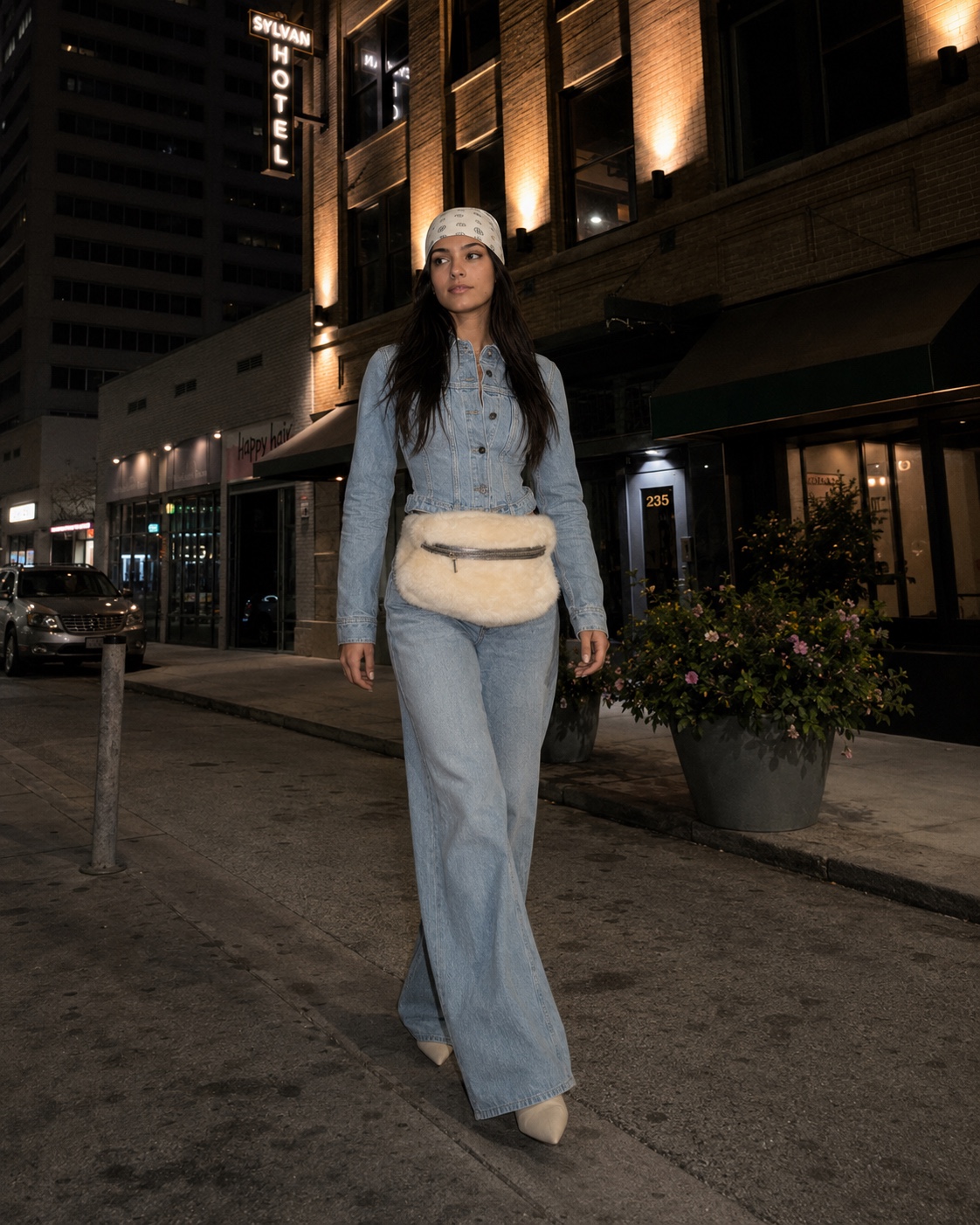
The lecture begins with body schema: the nervous system’s flexible estimate of where the body is. A tool can become an extension of the hand. A car can temporarily become part of the driver’s spatial map. Clothing can redraw the same boundary.
That reframes silhouette as more than appearance. A garment becomes a proposal about the edge of the human being inside it, perceived both by the wearer and by everyone around them.
The event moves across neuroscience, production systems, luxury economics, geometry, textile mechanics, robotics, media theory, and design history to ask what couture preserves that ordinary industrial systems erase.
How garments alter the perceived dimensions of the person, and why silhouette can change behavior before anyone consciously interprets it.
Why couture is unusually close to an honest accounting of skilled labor, while much of luxury monetizes meaning detached from the hours inside the object.
Why a flat woven sheet cannot simply become a doubly curved body, and how pattern cutting manages distortion rather than eliminating it.
How a heritage house can preserve visible references while silently losing the deeper rules and tacit capabilities that once generated them.
Why the nervous system does not treat skin as a fixed perceptual boundary.
Why couture is a production system organized around skilled hands, continuity, fittings, and accumulated judgment.
How a costly technical truth at the top of a house can support pricing power elsewhere in the brand.
How darts, seams, ease, and drape decide where the geometric error of fitting flat cloth to a curved body will live.
Why deformable textile manipulation remains difficult for machines even when abstract reasoning becomes easier to automate.
A framework for distinguishing archival quotation from genuine translation, continuation, or deliberate refutation.
Why photographs and feeds can preserve outline and anomaly while destroying weight, drape, recovery, sound, and motion.
How an atelier can lose capability years before the balance sheet reveals that anything has changed.
A practical set of questions for examining objects, institutions, representations, and hidden labor.

The final argument is not that couture is merely expensive craftsmanship. It is that a dressed body is the visible endpoint of accumulated human attention: pattern cutting, fitting, finishing, correction, and the tacit judgment of workers whose names rarely travel with the object.